


Introduction
Canadian homes spend much of the year sealed against the cold, which means the air inside is recirculated by the HVAC system far more than it is replaced by opening windows. This makes filtration, ventilation, and humidity control central to how clean and comfortable indoor air actually feels. In the Ottawa and Gatineau region, where homes are increasingly well insulated and airtight, mechanical systems play an even larger role in maintaining healthy indoor conditions. Understanding how an HVAC system influences air quality helps homeowners recognize which components matter most and when professional attention is needed.
Key Takeaways
- Indoor air quality depends on filtration, ventilation, humidity, and ductwork condition
- Air filters are rated using the MERV scale, which measures how effectively they capture particles
- Airtight homes rely on mechanical ventilation, such as an air exchanger, to bring in fresh air
- Heat recovery ventilators recover energy from outgoing air while renewing indoor air
- Humidity levels that are too high or too low both affect comfort and air quality
- Dirty ductwork and clogged filters restrict airflow and reduce system performance
- Regular HVAC maintenance is one of the most effective ways to support air quality
What Affects Indoor Air Quality
Several interconnected factors determine how clean and comfortable indoor air feels at any given time. Because the HVAC system continuously moves air throughout the home, its condition and settings directly influence most of these factors.
Key factors affecting indoor air quality include:
- How effectively the air filter captures dust, pollen, and other particles
- Whether the home receives enough fresh outdoor air through ventilation
- Indoor humidity levels, which affect both comfort and the growth of mold or mildew
- The cleanliness of ductwork and its ability to distribute air evenly
- The presence of pets, cooking, or other everyday sources of particles and odours
Addressing each of these factors together produces better results than focusing on only one.
The Role of Air Filtration
Air filters remove particles from the air as it circulates through the HVAC system, and their effectiveness is measured using the Minimum Efficiency Reporting Value, or MERV, scale. A higher MERV rating means the filter captures smaller particles, but it also increases resistance to airflow, so filters must be matched to what the system is designed to handle.
| MERV Range | Typical Particles Captured | Common Use |
|---|---|---|
| 1 to 4 | Large particles such as dust and pollen | Basic residential filtration |
| 5 to 8 | Mold spores and pet dander | Standard residential filtration |
| 9 to 12 | Fine dust and smaller airborne particles | Enhanced residential filtration |
| 13 and above | Fine particulates and some bacteria | High-efficiency residential filtration |
Choosing the right filter rating depends on the specific HVAC system, since a filter with excessive resistance can restrict airflow and reduce equipment performance.
Ventilation and Air Exchangers
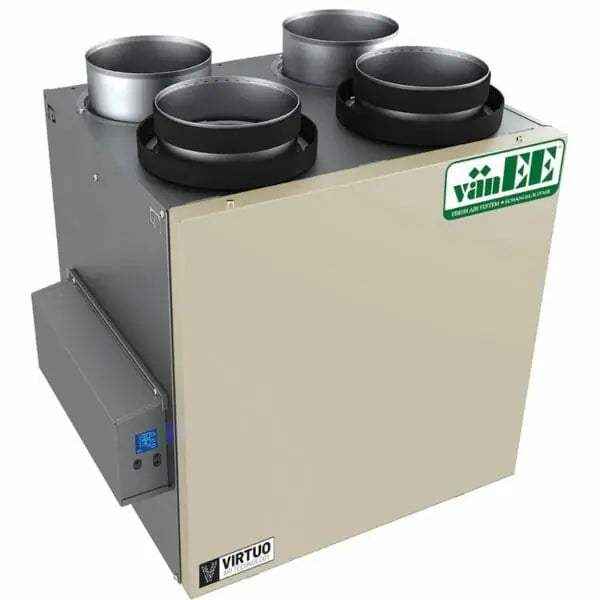
As homes become more airtight for energy efficiency, natural air leakage is no longer enough to bring in fresh outdoor air. This is where mechanical ventilation, in the form of an air exchanger, becomes essential for maintaining healthy indoor conditions.
Air exchangers, also known as heat recovery ventilators or energy recovery ventilators, provide the following benefits:
- Continuous removal of stale indoor air and introduction of fresh outdoor air
- Recovery of heat from outgoing air to reduce the load on the heating system
- Reduced buildup of humidity, odours, and airborne pollutants
- Consistent air renewal without needing to open windows
An air exchanger operates quietly and continuously, making it well suited to homes that stay closed for extended periods during winter.
Humidity and Air Quality
Humidity levels have a direct effect on both comfort and air quality. Air that is too dry can cause static, dry skin, and irritation, while air that is too humid can encourage condensation and mold growth on windows and walls. Proper ventilation plays a significant role in keeping humidity within a comfortable range throughout the year.
Signs that humidity levels may be out of balance include:
- Condensation forming on windows during colder months
- Musty odours or visible mold in bathrooms or basements
- Dry skin, static shocks, or irritated sinuses during winter
- Warped wood flooring or trim from excess moisture
Balanced humidity is easier to maintain in homes with adequate mechanical ventilation and a properly functioning HVAC system.
Ductwork, Airflow, and Duct Cleaning
Ductwork distributes conditioned air throughout the home, so its condition directly affects both airflow and air quality. Over time, dust, debris, and other particles can accumulate inside ducts, which may then circulate back into living spaces every time the system runs.
Signs that ductwork may need attention include:
- Visible dust buildup around vents and registers
- Uneven airflow between rooms
- Unusual odours when the system starts
- Increased dust settling on furniture shortly after cleaning
Duct cleaning, combined with regular filter changes, helps keep circulated air as clean as possible.
Signs of Poor Indoor Air Quality
Poor indoor air quality does not always announce itself clearly, since many signs develop gradually and can be mistaken for unrelated issues. Paying attention to patterns over time, rather than a single occurrence, helps identify whether the HVAC system needs attention.
Common signs of poor indoor air quality include:
- Persistent dust on surfaces shortly after cleaning
- Stale or musty odours that do not go away with regular cleaning
- Increased allergy or respiratory symptoms while at home
- Noticeable humidity issues, such as condensation or a stuffy feeling in certain rooms
Because these signs can stem from more than one cause, a professional assessment often provides the clearest explanation.
How Regular HVAC Maintenance Supports Air Quality
Maintenance is one of the most effective ways to support consistent indoor air quality, since a well-maintained system filters and circulates air more effectively than one that has been neglected.
Maintenance tasks that support air quality include:
- Replacing or cleaning air filters on a regular schedule
- Scheduling annual professional inspections of the HVAC system
- Cleaning or servicing the air exchanger's core and filters
- Verifying that ductwork is sealed and free of significant leaks
These tasks work together to keep both the heating and cooling system and the air it circulates in good condition.
Improving Indoor Air Quality: Where to Start
Improving indoor air quality is easier to approach one area at a time rather than trying to address everything at once. The table below summarizes where to focus based on common concerns.
| Area | Recommended Action |
|---|---|
| Filtration | Confirm the filter rating is appropriate for the system and replace it regularly |
| Ventilation | Ensure adequate fresh air exchange, particularly in airtight homes |
| Humidity | Monitor for signs of excess dryness or moisture throughout the year |
| Ductwork | Schedule duct cleaning if dust or airflow issues are noticeable |
| Maintenance | Book an annual professional inspection of the full HVAC system |
Working through these areas in order helps identify which factors are having the greatest impact on air quality in a specific home, rather than replacing components that were not the source of the issue.
When to Call a Professional
Some indoor air quality issues are difficult to resolve without a proper assessment of the HVAC system and ductwork. A qualified technician can identify whether filtration, ventilation, humidity, or ductwork is the primary contributor to a specific concern.
Professional evaluation is recommended when:
- You notice persistent odours, dust, or condensation issues
- Your home feels stuffy or humidity seems difficult to control
- You are considering adding or upgrading an air exchanger
- Ductwork has not been inspected or cleaned in several years
Working with an experienced provider such as Fernand Denis Inc. helps ensure your HVAC system, ventilation, and filtration are working together to support healthy indoor air throughout every season.
Conclusion
Indoor air quality depends on how well an HVAC system filters, ventilates, and circulates air throughout the home. Filtration, mechanical ventilation, humidity control, and clean ductwork all play a role, and addressing them together produces better results than focusing on any single factor alone.
Understanding these connections helps homeowners make informed decisions about their HVAC system and its impact on daily comfort. When professional input is needed, working with a qualified HVAC provider such as Fernand Denis Inc. helps ensure the system is properly assessed and maintained for healthier indoor air.
Frequently Asked Questions About Indoor Air Quality
What is the biggest factor affecting indoor air quality?
No single factor is always the biggest contributor, since filtration, ventilation, humidity, and ductwork all interact with one another. A professional assessment helps identify which factor is having the greatest impact in a specific home, rather than guessing based on one symptom.
What does MERV rating mean for air filters?
MERV stands for Minimum Efficiency Reporting Value, and it indicates how effectively a filter captures airborne particles. Higher MERV ratings capture smaller particles but can also increase resistance to airflow, so the rating should match what the system is designed to handle without restricting performance.
Do I need an air exchanger if my home already has a furnace?
Yes, a furnace heats and circulates air but does not bring in fresh outdoor air on its own. An air exchanger provides the mechanical ventilation needed in airtight homes, particularly during winter when windows stay closed for extended periods.
Can duct cleaning improve indoor air quality?
Yes, cleaning ductwork removes accumulated dust and debris that would otherwise circulate through the home. This is particularly helpful in homes where dust buildup or uneven airflow has been noticeable over several months.
How does humidity affect indoor air quality?
Humidity that is too low can cause dryness and irritation, while humidity that is too high can encourage mold and condensation. Proper ventilation helps keep humidity within a comfortable and healthy range throughout the changing seasons.
How often should HVAC maintenance be performed for air quality reasons?
Most systems benefit from at least one professional inspection per year, in addition to regular filter changes throughout the year. Homes with air exchangers should also have the unit's core and filters serviced periodically to maintain proper airflow and ventilation.




Partager: