


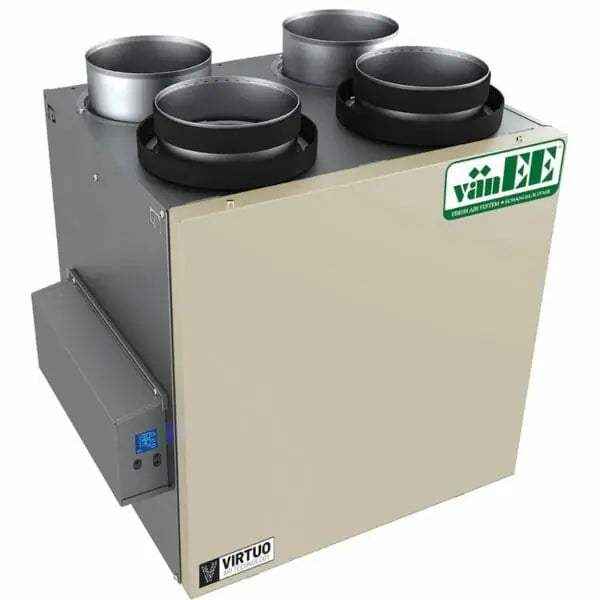
In a well-insulated Canadian home, the air inside does not move on its own. Without a mechanical ventilation system, indoor air accumulates moisture, carbon dioxide, allergens, and other pollutants at concentrations that affect both comfort and health. An air exchanger solves this problem by continuously replacing stale indoor air with fresh outdoor air, while recovering heat in the process so the energy cost of ventilation remains low. For homeowners in the Ottawa and Gatineau region, where homes are tightly sealed against months of cold weather, understanding how these systems work and how to select the right one is a practical necessity.
Key Points
- Air exchangers mechanically replace stale indoor air with fresh outdoor air while recovering heat from the outgoing airstream
- HRV (Heat Recovery Ventilator) systems are the standard choice for cold Canadian climates and suit the vast majority of residential applications
- ERV (Energy Recovery Ventilator) systems transfer both heat and moisture and are better suited to mixed or humid climates
- Heat recovery efficiency, airflow capacity, and defrost performance are the three most important specifications to evaluate for Canadian conditions
- A clogged or neglected air exchanger reduces indoor air quality and system efficiency, making regular maintenance essential
- Proper installation requires airflow balancing by a certified technician to avoid pressure problems and performance loss
- Air exchangers are particularly valuable in modern, well-insulated homes where natural air infiltration is minimal
- Annual professional servicing helps maintain recovery efficiency and extends the service life of the unit
How an Air Exchanger Works
An air exchanger moves two separate airstreams simultaneously: one draws stale indoor air out of the home, and the other brings fresh outdoor air in. These two streams pass through a heat exchange core, a series of thin channels positioned in close proximity, where thermal energy transfers from the warm outgoing air to the cooler incoming air. The two airstreams never mix, so no indoor pollutants are recycled back into the living space.
The efficiency of this heat transfer is expressed as a percentage and is called the sensible recovery efficiency (SRE) or heat recovery efficiency. A well-performing residential unit typically achieves a rating between 70 and 85 percent, meaning it recovers that proportion of the heat that would otherwise be lost when exhausting indoor air to the outside. This recovery significantly reduces the additional heating load the furnace must compensate for during continuous ventilation.
Most modern units also include a variable-speed fan, a filtration stage that removes particles from incoming air, and a frost protection mechanism that prevents the heat exchange core from freezing during very cold weather.
HRV vs. ERV: Choosing the Right System for Your Climate
The two primary types of air exchangers used in Canadian homes operate on the same principle but handle moisture differently. Understanding this distinction is the most important decision in the selection process.
An HRV (Heat Recovery Ventilator) transfers heat only. Moisture in the outgoing air is exhausted to the outside, which makes HRVs well suited to cold, dry climates where indoor humidity is typically too high rather than too low. During a Canadian winter, cooking, bathing, and normal occupancy generate significant indoor moisture. An HRV removes that excess humidity along with the stale air, which reduces the risk of condensation on windows and walls and lowers the likelihood of mould growth.
An ERV (Energy Recovery Ventilator) transfers both heat and moisture. This means that some of the humidity in the outgoing air is retained and delivered back to the living space along with the incoming fresh air. ERVs are more appropriate in mixed or humid climates where maintaining indoor humidity levels in winter is a concern, or in homes with very low occupancy where indoor humidity generation is minimal.
For most homeowners in Quebec, Ontario, and the surrounding region, an HRV is the recommended starting point. The cold, dry winter climate and the moisture generated by typical household activity make heat-only recovery the more practical and effective approach.
| Feature | HRV | ERV |
|---|---|---|
| Heat recovery | Yes | Yes |
| Moisture transfer | No (exhausts excess humidity) | Yes (retains some indoor humidity) |
| Best climate fit | Cold, dry winters (most of Canada) | Mixed or humid climates |
| Typical SRE range | 70 to 85% | 65 to 80% |
| Defrost mechanism required | Yes, essential for Canadian winters | Yes, recommended |
| Suited to high indoor humidity | Yes | Less so |
Key Specifications to Evaluate
Once the system type is determined, several technical specifications distinguish units that perform well in Canadian conditions from those that fall short. The following are the most meaningful factors to assess when comparing models.
Heat Recovery Efficiency
This is the single most important performance metric. For Canadian climates, a minimum sensible recovery efficiency of 75 percent is the practical benchmark. Units below this threshold require the furnace to compensate more significantly for heat lost during ventilation, reducing the energy benefit of the system.
Airflow Capacity
Airflow is measured in CFM (cubic feet per minute) and determines whether a unit is appropriately sized for the home. An undersized unit cannot ventilate the space adequately, while an oversized unit may create pressure imbalances. Sizing is based on home square footage, ceiling height, and number of occupants, and should be confirmed by a certified installer before purchase.
Defrost Performance
In temperatures below approximately minus 25 degrees Celsius, moisture in the exhaust airstream can freeze inside the heat exchange core, blocking airflow and reducing efficiency. A robust automatic defrost system is not optional for most Canadian installations. Units rated for operation at minus 40 degrees Celsius provide a meaningful safety margin for the Ottawa and Gatineau region's coldest periods.
Sound Level
Sound output is measured in sones. A rating of 1.5 sones or below is considered quiet for residential use. Units with higher sone ratings may become disruptive in open-concept living spaces or near bedrooms, particularly when operating at higher speeds.
Filter Type
Incoming air passes through a filter before being delivered to the living space. Higher-rated filters (using the MERV scale, which stands for Minimum Efficiency Reporting Value) capture smaller particles including dust, pollen, and mold spores. Homes with occupants who have respiratory sensitivities benefit from units with higher MERV-rated filtration.
Benefits of Installing an Air Exchanger
For Canadian homeowners in well-insulated homes, the benefits of a properly installed and maintained air exchanger are concrete and measurable. The following summarizes the primary improvements homeowners can expect.
- Improved indoor air quality: Continuous dilution and removal of carbon dioxide, volatile organic compounds, allergens, odours, and excess moisture keeps indoor air concentrations at healthier levels.
- Moisture and humidity control: Consistent ventilation reduces the risk of condensation on cold surfaces, which is one of the leading contributors to mould growth and long-term structural damage in tightly sealed Canadian homes.
- Reduced heating load: By recovering heat from outgoing air, the system reduces the additional energy the furnace must produce to compensate for ventilation, particularly during extended cold periods.
- Year-round comfort: Eliminating the stale, stuffy air quality common in sealed homes improves daily comfort, especially in lower levels and bedrooms where air circulation is naturally limited.
- Building code compliance: Many Canadian provinces require mechanical ventilation in new construction. A certified unit installed to code satisfies this requirement.
Installation: What the Process Involves
A properly installed air exchanger requires more than mounting the unit and connecting two duct runs. The following considerations directly affect long-term performance.
Duct runs should be kept short and direct, with exterior terminations fitted with weatherproof hoods and insect screening. Ducts routed through uninsulated attic sections or cold crawl spaces must be insulated to prevent condensation from forming inside the ductwork.
The unit should be positioned in a mechanical room or finished basement area that allows easy access for filter cleaning and annual servicing. Units installed in inaccessible locations tend to be neglected, which significantly shortens their effective service life.
After installation, a certified technician must balance the supply and exhaust airflows using calibrated measurement equipment. Negative pressurization can draw soil gases including radon indoors and cause combustion appliances to backdraft. Positive pressurization can force moist indoor air into wall cavities, causing condensation and structural damage. Balancing cannot be assessed by feel or observation alone.
Maintenance Requirements
An air exchanger that is not maintained regularly loses efficiency and can introduce air quality problems rather than resolving them. The maintenance tasks are straightforward and divide clearly between what a homeowner can handle and what requires a technician.
| Task | Who Performs It | Frequency |
|---|---|---|
| Filter cleaning or replacement | Homeowner | Every 3 to 6 months |
| Exterior hood and screen check | Homeowner | Each season |
| Heat exchange core cleaning | Licensed technician | Annually |
| Condensate drain inspection | Licensed technician | Annually |
| Defrost system test | Licensed technician | Annually before winter |
| Airflow balance verification | Licensed technician | Every 2 to 3 years |
Filters are the most frequently neglected component. A clogged filter restricts airflow, forces the unit to work harder, and reduces the quality of air delivered to the living space. Most manufacturers recommend checking filters every three months during the heating season.
The heat exchange core should be cleaned at least once per year by a technician. Dust buildup on the core surfaces reduces heat transfer efficiency and can create conditions for microbial growth in humid environments.
Conclusion
An air exchanger is one of the most practical investments a homeowner can make in a well-insulated Canadian home. It addresses the ventilation deficit created by modern construction standards, improves daily indoor air quality, controls moisture, and reduces the heating energy lost through continuous ventilation. Selecting the right system type, verifying key specifications, and ensuring the unit is professionally installed and balanced are the steps that determine whether the system performs as intended over its service life. Fernand Denis Inc. offers air exchanger installation and servicing across the Ottawa and Gatineau region, with expertise in selecting and installing units suited to the specific demands of the local climate.
Frequently Asked Questions
What is the difference between an HRV and an ERV?
An HRV transfers heat only from outgoing to incoming air, exhausting excess moisture in the process. An ERV transfers both heat and moisture. For most Canadian homes in cold, dry climates, an HRV is the more appropriate choice because it removes rather than retains indoor humidity during the heating season.
Does an air exchanger replace the furnace?
No. An air exchanger manages ventilation and air quality. It recovers heat from outgoing air to reduce the additional load placed on the furnace, but it does not generate heat. The two systems work together as part of a complete home comfort setup.
How do I know if my home needs an air exchanger?
Tightly sealed and well-insulated homes, including most homes built or renovated in the past two decades, typically require mechanical ventilation. Signs that natural ventilation is insufficient include persistent condensation on windows, elevated indoor humidity, stale or stuffy air quality, and recurring odour buildup.
How often does an air exchanger need servicing?
Filters should be checked and cleaned or replaced every three to six months. The heat exchange core, condensate drain, and defrost system should be inspected by a certified technician once per year, ideally before the heating season begins.
Can an air exchanger help with radon?
Increased ventilation through a properly balanced air exchanger helps dilute radon, a naturally occurring radioactive gas that can accumulate in the lower levels of Canadian homes. However, an air exchanger is not a standalone radon mitigation system. If radon levels are a concern, a dedicated radon assessment should be conducted separately.
What happens if the airflow is not balanced after installation?
Unbalanced airflow creates pressure differences inside the home. Negative pressure can draw soil gases and radon indoors and cause backdrafting in combustion appliances. Positive pressure can push humid indoor air into wall cavities, leading to condensation and structural damage. Balancing by a certified technician after installation is essential.


Share:
Furnace Not Turning On: How to Diagnose the Problem and What to Do Next
How Does Central Air Conditioning Work?