


Introduction
Central air conditioning cools an entire home by moving heat from indoor air to the outdoors, rather than generating cold air directly. Understanding this process helps explain why certain components matter, why airflow and ductwork affect performance, and why regular maintenance keeps a system running efficiently. For homeowners in the Ottawa and Gatineau region, where summers bring extended periods of heat and humidity, knowing how a central air conditioner works can also make it easier to recognize when something is not operating as it should. This guide breaks down the cooling process, the main components involved, how ductwork and thermostats fit into the system, and how efficiency is measured.
Key Takeaways
- Central air conditioning works by moving heat out of the home rather than creating cold air
- The system relies on a refrigerant that changes between liquid and gas as it absorbs and releases heat
- Four main components work together: the evaporator coil, compressor, condenser coil, and expansion device
- The indoor and outdoor units each play a distinct role in the cooling cycle
- Ductwork and airflow distribute cooled air evenly throughout the home
- Efficiency is measured using the Seasonal Energy Efficiency Ratio, or SEER
- Regular maintenance helps the system maintain consistent performance over time
The Basic Cooling Cycle
Central air conditioning relies on a refrigeration cycle, the same basic principle used in refrigerators, applied at a scale large enough to cool an entire home. Refrigerant is a fluid that absorbs heat as it evaporates and releases heat as it condenses, allowing it to carry heat from indoor air to the outdoors.
The cooling cycle generally follows these steps:
- Warm indoor air passes over the evaporator coil, where refrigerant absorbs heat and evaporates into a gas
- The compressor pressurizes this gas, increasing its temperature
- The condenser coil releases that heat to the outdoor air as the refrigerant turns back into a liquid
- An expansion device reduces the refrigerant's pressure and temperature before it returns to the evaporator coil to repeat the cycle
This continuous cycle is what allows a central air conditioner to steadily remove heat from a home rather than cooling it in a single burst.
Key Components of a Central Air Conditioner
A central air conditioning system is split between an outdoor unit and an indoor unit, each housing different components that work together during the cooling cycle.
The Outdoor Unit
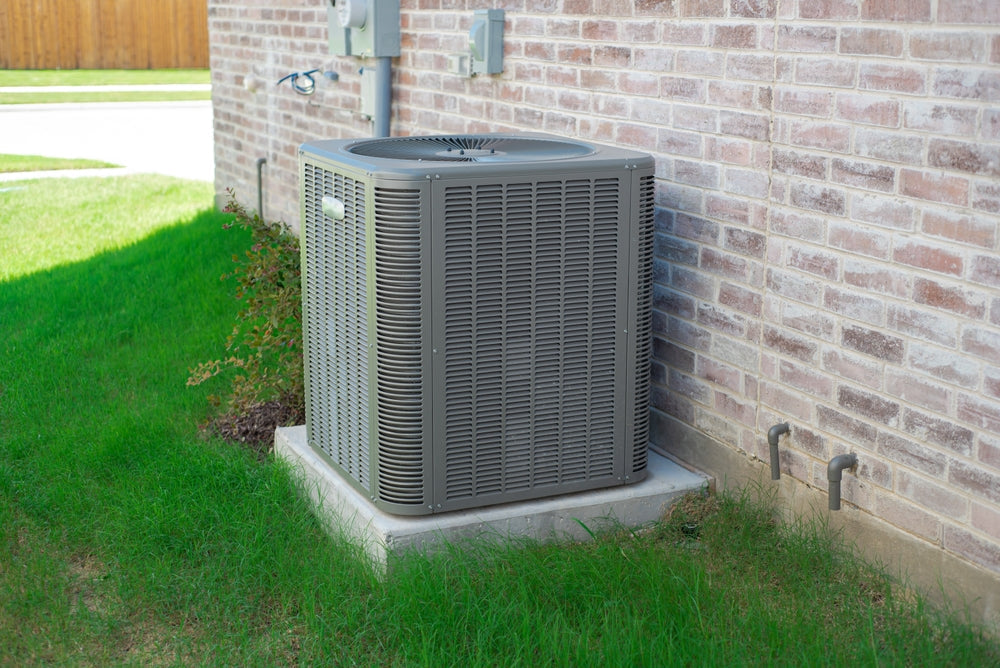
The outdoor unit contains the compressor and condenser coil, along with a fan that pulls outdoor air across the coil. This is where heat absorbed from inside the home is released into the outdoor air.
Key characteristics of the outdoor unit include:
- Houses the compressor, which pressurizes the refrigerant
- Contains the condenser coil, where heat is released outdoors
- Uses a fan to move outdoor air across the condenser coil
- Requires clearance around it for proper airflow
The Indoor Unit
The indoor unit typically includes the evaporator coil and blower, often installed alongside or on top of the furnace. This is where indoor air is cooled before being distributed through the ductwork.
Key characteristics of the indoor unit include:
- Houses the evaporator coil, where heat is absorbed from indoor air
- Includes the blower that circulates cooled air through the ducts
- Works alongside the furnace's air handler in many homes
- Requires clean filters to maintain proper airflow
How Refrigerant Moves Heat
Refrigerant is central to how a cooling system works, since it is the substance responsible for carrying heat from inside the home to the outdoors. As refrigerant changes between liquid and gas states, it absorbs heat in one location and releases it in another.
This phase change process explains several aspects of system behaviour:
- Refrigerant absorbs heat as it evaporates inside the evaporator coil
- The same refrigerant releases that heat as it condenses in the outdoor unit
- The refrigerant is reused continuously in a closed loop rather than consumed
- Correct refrigerant levels are necessary for the system to cool effectively
A system with low refrigerant cannot absorb or release heat efficiently, which is one reason refrigerant levels are checked during professional maintenance visits.
The Role of Ductwork and Airflow
Once air has been cooled by the indoor unit, ductwork carries it throughout the home and returns warmer air back to the system to be cooled again. The condition and design of this ductwork directly affects how evenly a home cools.
Factors that influence airflow and distribution include:
- The size and layout of the ductwork relative to the home's square footage
- Whether ducts are sealed properly to prevent air loss
- The condition of air filters, which affect how easily air can move through the system
- The balance of supply and return vents throughout the home
Well designed and properly maintained ductwork helps ensure that cooled air reaches every room evenly.
Central Air Conditioning Compared to Ductless Systems
Central air conditioning is not the only way to cool a home, and understanding how it compares to a ductless system helps clarify which approach suits a specific layout.
| Feature | Central Air Conditioning | Ductless System |
|---|---|---|
| Air distribution | Through existing ductwork | Through individual wall-mounted units |
| Best suited for | Homes with existing ductwork | Homes without ducts or specific room additions |
| Zoning capability | Limited without additional equipment | Naturally suited to zoned cooling |
| Installation scope | Connects to existing duct system | Requires wall-mounted units per zone |
Both approaches rely on the same basic refrigeration cycle, but the way cooled air is delivered differs significantly.
Thermostat and System Communication
The thermostat acts as the control point for a central air conditioning system, signaling when the compressor and blower should turn on or off based on the indoor temperature. This communication determines how closely the system maintains the desired setting.
Common thermostat functions include:
- Monitoring indoor temperature and comparing it to the set point
- Signaling the outdoor unit to start or stop the compressor
- Coordinating the indoor blower to circulate cooled air
- Supporting programmable schedules for different times of day
A properly functioning thermostat ensures the compressor and blower work together efficiently rather than cycling unnecessarily.
Efficiency Ratings for Central Air Conditioners
Central air conditioner efficiency is measured using the Seasonal Energy Efficiency Ratio, or SEER, which reflects how much cooling a system provides relative to the energy it consumes over a season. As of 2025, Natural Resources Canada requires newly installed central air conditioners to meet a minimum SEER rating of 14.
| SEER Range | General Efficiency Level |
|---|---|
| 14 to 15 | Meets current minimum efficiency standards |
| 16 to 18 | Considered a strong efficiency range for most homes |
| Above 18 | High efficiency, often paired with variable-speed components |
Choosing a SEER rating appropriate for a specific home depends on factors such as climate, home size, existing ductwork, and how long the system is expected to run each season.
Maintenance and Long-Term Performance
Routine maintenance helps a central air conditioner continue operating at or near its designed efficiency level throughout its service life. Neglecting maintenance tends to reduce performance gradually rather than causing an immediate failure.
Maintenance tasks that support long-term performance include:
- Replacing or cleaning air filters on a regular schedule
- Scheduling an annual professional inspection before cooling season
- Cleaning the outdoor condenser coil and clearing debris around the unit
- Verifying refrigerant levels and electrical connections
Consistent maintenance helps the system maintain both its cooling capacity and its energy efficiency over time, rather than gradually losing performance without an obvious cause.
When to Call a Professional
Some aspects of a central air conditioning system, such as refrigerant levels and electrical components, require specialized tools and training to assess safely.
Professional evaluation is recommended when:
- Your system is not cooling as effectively as it used to
- You notice unusual noises from the indoor or outdoor unit
- You are considering upgrading to a higher SEER rated system
- You are unsure whether your ductwork can support your current or a new system
Working with an experienced provider such as Fernand Denis Inc. helps ensure your central air conditioning system is properly assessed, maintained, and sized for your home.
Conclusion
Central air conditioning works by continuously moving heat out of the home using a refrigerant that cycles between liquid and gas states, supported by an indoor unit, an outdoor unit, and a network of ductwork. Understanding these components helps explain how efficiency ratings like SEER apply and why regular maintenance matters.
Recognizing how the system works also makes it easier to notice when something is not performing as expected. When professional guidance is needed, a qualified HVAC provider such as Fernand Denis Inc. can help assess, maintain, or upgrade your central air conditioning system.
Frequently Asked Questions About Central Air Conditioning
What is the basic principle behind central air conditioning?
Central air conditioning works by moving heat from inside a home to the outdoors using a refrigerant that changes between liquid and gas states. This process removes heat rather than generating cold air directly.
What are the main components of a central air conditioner?
The main components are the evaporator coil, compressor, condenser coil, and expansion device. The evaporator coil and blower are typically indoors, while the compressor and condenser coil are located in the outdoor unit.
What does SEER rating measure?
SEER, or Seasonal Energy Efficiency Ratio, measures how much cooling a system provides relative to the energy it consumes over a season. Higher SEER ratings generally indicate greater efficiency.
Does central air conditioning require ductwork?
Yes, central air conditioning relies on ductwork to distribute cooled air throughout the home and return warmer air back to the system. Homes without ductwork typically use ductless systems instead.
Why does low refrigerant affect cooling performance?
Refrigerant is responsible for absorbing and releasing heat during the cooling cycle, so low refrigerant levels prevent the system from transferring heat effectively. This is one of the checks performed during professional maintenance.
How often should a central air conditioner be serviced?
Most central air conditioners benefit from a professional inspection once a year, typically in the spring before cooling season begins. Regular filter changes throughout the season also support consistent performance.




Partager: