


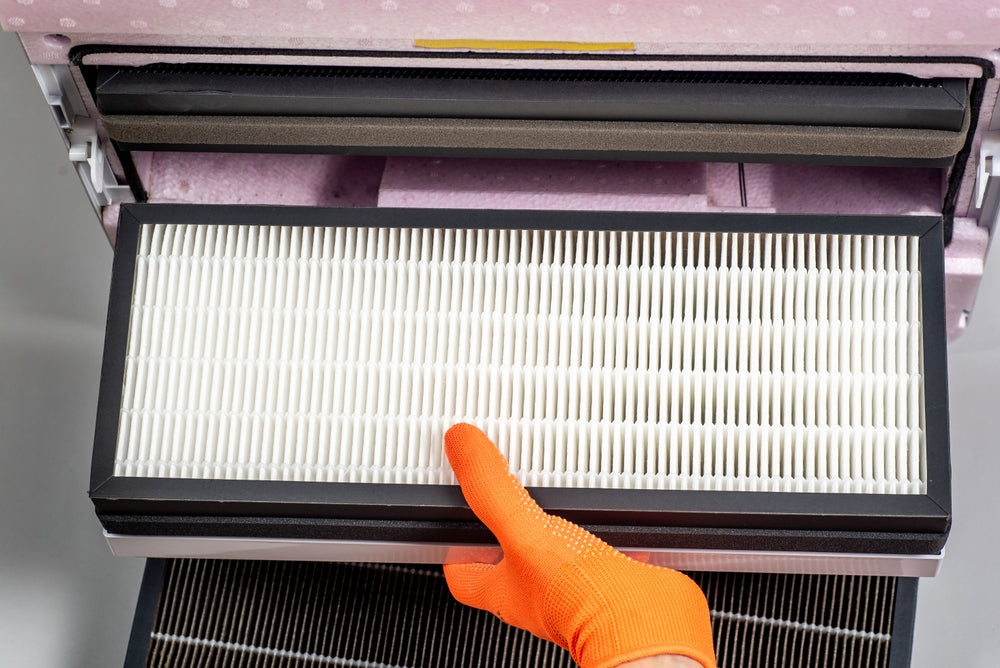
Choosing the right air filter affects indoor air quality, system performance, and energy costs. HEPA filters and standard filters serve different purposes and offer distinct advantages depending on household needs and HVAC system capabilities. Understanding how these filter types differ helps homeowners make informed decisions about filtration levels appropriate for their specific situations.
This guide compares HEPA and standard filters across key factors including filtration efficiency, compatibility, cost, and practical considerations for residential applications.
Key Takeaways
- HEPA filters capture 99.97 percent of particles 0.3 microns and larger
- Standard filters provide adequate protection for most homes without special air quality needs
- HVAC systems require sufficient airflow capacity to accommodate high-efficiency filters
- MERV ratings indicate filter efficiency from basic dust capture to near-HEPA performance
- Households with allergies or respiratory conditions benefit most from higher filtration
- Filter pressure drop affects system airflow and must match equipment specifications
- Regular replacement schedules matter more than filter type for maintaining air quality
- Professional assessment determines appropriate filtration for specific HVAC systems
What Standard Filters Capture
Standard filters typically range from MERV 6 to MERV 8 for most residential applications. These filters effectively capture common household particles while maintaining adequate airflow for typical HVAC systems. They represent the baseline filtration level that protects equipment and provides acceptable indoor air quality for homes without special requirements.
Standard filters effectively remove:
- Dust and lint particles that settle on surfaces
- Pet hair and larger dander particles
- Pollen and mold spores during peak seasons
- Carpet fibers and fabric particles
- Larger dust mite debris
These filters provide adequate protection for most households without allergy sufferers or respiratory conditions. They prevent dust accumulation on heating and cooling components while maintaining system efficiency. The lower resistance to airflow ensures furnaces and air conditioners operate as designed without strain on blower motors.
HEPA Filter Capabilities and Limitations
HEPA filtration captures particles far smaller than standard filters can trap. These filters remove microscopic contaminants including viruses, bacteria, smoke particles, and ultrafine allergens. The filtration media consists of densely packed fibers arranged to intercept particles through multiple mechanisms including direct impaction, interception, and diffusion.
True HEPA filters must meet strict standards established by the Department of Energy. They capture 99.97 percent of particles measuring 0.3 microns in diameter. This specification represents the most penetrating particle size, meaning filters perform even better on both larger and smaller particles. The designation ensures consistent performance across different manufacturers.
HEPA limitations for residential HVAC systems include:
- High airflow resistance requiring powerful blower motors
- Potential system strain if equipment lacks adequate capacity
- Higher initial cost compared to standard filters
- More frequent replacement due to particle loading
- Possible modifications needed for proper installation
Most residential HVAC systems require modification to accommodate true HEPA filters. Standalone HEPA air purifiers provide an alternative for rooms requiring enhanced filtration without stressing central heating and cooling equipment. These portable units offer HEPA-level cleaning for specific spaces where occupants spend the most time.
System Compatibility Considerations
HVAC systems are designed to operate with specific airflow levels. Filters create resistance that the blower motor must overcome to circulate air through the ductwork. Installing filters that create too much resistance reduces airflow below design specifications and causes multiple problems including reduced heating and cooling capacity, increased energy consumption, and potential equipment damage.
| Filter Type | MERV Rating | Airflow Impact |
|---|---|---|
| Basic fiberglass | 1 to 4 | Minimal restriction |
| Standard pleated | 6 to 8 | Low restriction |
| High-efficiency pleated | 11 to 13 | Moderate restriction |
| True HEPA | 17 to 20 | High restriction |
Checking system specifications before upgrading filters prevents compatibility problems. Furnace and air handler documentation indicates maximum filter resistance the blower can handle. Installing filters exceeding these specifications reduces system performance and may void equipment warranties. Professional assessment determines appropriate filtration levels for specific HVAC equipment.
Who Benefits from HEPA Filtration
HEPA-level filtration provides measurable benefits for households with specific air quality concerns. While standard filtration suffices for most homes, certain situations warrant enhanced particle removal that only high-efficiency filters deliver.
HEPA filtration particularly helps households with:
- Severe allergies to pollen, dust, or pet dander
- Asthma or chronic respiratory conditions
- Compromised immune systems requiring clean air
- Concerns about airborne viruses and bacteria
- Homes in areas with poor outdoor air quality
- Multiple pets producing significant dander
For households without these specific concerns, high-efficiency pleated filters rated MERV 11 to 13 often provide an appropriate middle ground. These filters capture most allergens and fine particles while requiring less airflow capacity than true HEPA filters. They cost less than HEPA options and fit standard filter slots without modification.
Proper Filter Maintenance Practices
Filter effectiveness depends more on proper maintenance than on efficiency rating alone. Even HEPA filters lose effectiveness when clogged with collected particles. Conversely, standard filters changed regularly provide better air quality than high-efficiency filters left in place too long.
Recommended replacement intervals by filter type:
- Basic fiberglass filters: every 30 days
- Standard pleated filters: every 60 to 90 days
- High-efficiency pleated filters: every 90 days
- HEPA filters in whole-house systems: every 6 to 12 months
- Portable HEPA unit filters: according to manufacturer specifications
Actual replacement needs vary based on household conditions. Homes with pets, high occupancy, or significant dust require more frequent changes. Running an HVAC fan continuously accelerates particle collection. Checking filters monthly allows visual assessment of loading regardless of theoretical replacement intervals.
Alternatives to Whole-House HEPA Filtration
Achieving HEPA-level air quality does not require modifying central HVAC systems. Several practical alternatives provide enhanced filtration where needed most without stressing heating and cooling equipment.
Portable HEPA air purifiers offer room-specific filtration without HVAC modifications. These standalone units process air independently of the central system, providing HEPA-level cleaning in bedrooms, home offices, or other spaces where occupants spend significant time. Quality units include proper air circulation to ensure effective room coverage.
Upgrading to high-efficiency pleated filters rated MERV 11 to 13 provides substantial improvement over basic filtration. These filters capture most allergens and fine particles while remaining compatible with typical residential HVAC systems. They represent a practical middle ground between standard and HEPA filtration.
Some HVAC systems accommodate media filters or electronic air cleaners that approach HEPA performance. Media filters use thicker filtration material with larger surface area to minimize airflow restriction. Electronic air cleaners electrically charge particles for collection. Both options require professional installation but integrate with existing ductwork.
Making the Right Choice for Your Home
Selecting appropriate filtration requires balancing air quality goals with system capabilities and practical considerations. No single filter type suits every situation. The right choice depends on household needs, HVAC equipment specifications, and budget constraints.
Key factors to consider include:
- Presence of allergies or respiratory conditions in household members
- HVAC system age and blower motor capacity
- Local air quality and outdoor pollution levels
- Number of pets and household occupants
- Willingness to maintain regular replacement schedules
- Budget for both initial filter cost and ongoing replacements
Starting with mid-range filters provides a reasonable baseline for most homes. MERV 8 to 11 filters offer significant improvement over basic fiberglass while maintaining compatibility with typical HVAC systems. Households can upgrade to higher-efficiency options if air quality concerns persist or if health conditions warrant enhanced filtration.
Professional Assessment and Installation
HVAC professionals provide valuable guidance for filter selection and installation. They assess system capabilities, measure airflow, and recommend appropriate filtration levels based on equipment specifications. This expertise prevents compatibility problems that reduce system performance or cause equipment damage.
Professional installation becomes necessary when upgrading to HEPA-level filtration in central systems. Modifications may include adding filter cabinets with larger surface area, installing bypass dampers to maintain proper airflow, or integrating electronic air cleaners. Working with experienced providers like Fernand Denis Inc. ensures proper system evaluation and appropriate filtration solutions that maintain equipment performance while achieving air quality goals.
Conclusion
HEPA and standard filters serve different purposes in residential air quality management. Standard filters provide adequate protection for most homes while maintaining system performance and keeping costs reasonable. HEPA-level filtration benefits households with specific health concerns but requires compatible equipment or standalone air purifiers.
The most effective filtration strategy balances air quality goals with system capabilities and practical maintenance. Regular filter replacement matters more than filter type for maintaining healthy indoor air. Mid-range filters rated MERV 8 to 11 suit typical households, while higher efficiency options serve those with allergies or respiratory conditions.
When questions arise about appropriate filtration for your specific situation, consulting with HVAC professionals like Fernand Denis Inc. provides expert guidance. Professional assessment ensures filter selections match equipment capabilities while achieving desired air quality improvements without compromising system performance.
Frequently Asked Questions About Air Filters
Can I install a HEPA filter in my standard furnace?
Most standard residential furnaces lack sufficient blower capacity for true HEPA filters. The high airflow restriction can reduce system performance and potentially damage equipment. High-efficiency pleated filters rated MERV 11 to 13 provide enhanced filtration while maintaining compatibility with typical furnaces. Professional assessment determines appropriate filter options for your specific equipment.
How do I know what MERV rating my system can handle?
Check your furnace or air handler documentation for maximum filter resistance specifications. Most residential systems handle MERV 8 to 11 without problems. Higher ratings may require professional evaluation to ensure adequate airflow. If documentation is unavailable, HVAC technicians can measure system airflow and recommend appropriate filter efficiency levels.
Are expensive filters worth the extra cost?
Value depends on household needs. Homes with allergy sufferers or respiratory conditions benefit from higher-efficiency filters despite increased cost. For households without specific air quality concerns, mid-range filters provide adequate protection at lower expense. Consider both purchase price and replacement frequency when evaluating filter value over time.
Do HEPA filters eliminate all allergens?
HEPA filters remove airborne allergens that pass through them, but cannot eliminate allergens already settled on surfaces. They significantly reduce airborne particle concentrations when combined with regular cleaning practices. Complete allergen elimination requires addressing both airborne and surface contamination through comprehensive indoor air quality strategies.
Should I use the same filter year-round?
Using consistent filtration year-round simplifies maintenance and ensures continuous air quality protection. However, some households increase filter efficiency during high pollen seasons or wildfire smoke events. Ensure any temporary upgrades remain compatible with system airflow requirements. Return to standard filters when seasonal concerns diminish.




Partager: