


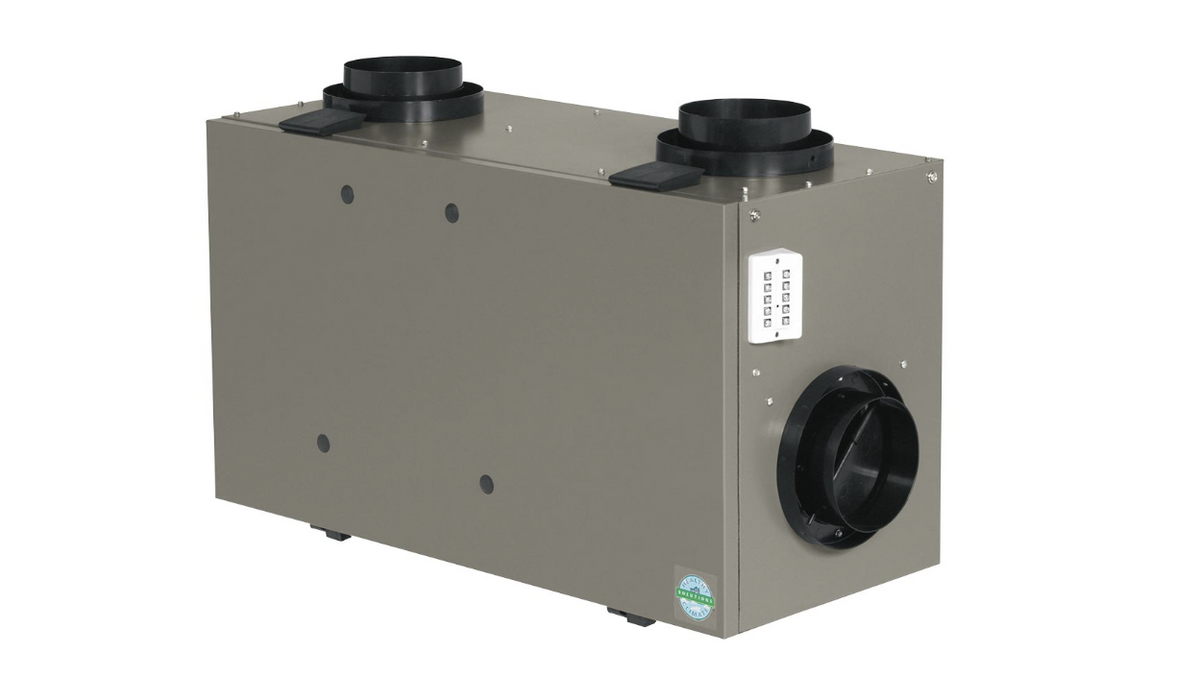
An air exchanger that is not functioning correctly does more than create discomfort. In a tightly sealed Canadian home, a failing ventilation system allows indoor pollutants, excess moisture, and carbon dioxide to accumulate at levels that affect both health and building integrity. Understanding what the warning signs mean, what causes them, and how to respond gives homeowners the practical foundation to protect their system and their indoor air quality.
Key Points
- Reduced airflow, condensation on windows, and persistent indoor odours are among the most common signs that an air exchanger is underperforming
- Clogged filters are the single most frequent cause of air exchanger problems and the easiest to correct
- Frost or ice buildup on the heat exchange core is a specific cold-weather issue that indicates the defrost system is not functioning correctly
- Electrical faults, failing motors, and sensor malfunctions require professional diagnosis and should not be approached without proper training
- Most air exchanger problems can be prevented through consistent filter maintenance and annual professional servicing
- Unbalanced airflow, where the supply and exhaust rates are not equal, can cause pressure problems that affect the entire home
- Operating a malfunctioning air exchanger does not resolve the underlying issue and can accelerate component wear
- A certified HVAC technician has the diagnostic tools needed to assess refrigerant pressure, airflow balance, and electrical integrity accurately
Recognizing the Signs of a Problem
Air exchangers rarely fail without warning. Several performance changes typically appear before a complete breakdown, and identifying them early makes a significant difference in repair complexity.
The most common signs that an air exchanger is not working properly include the following:
- Reduced airflow from supply vents: if the amount of fresh air entering the home feels noticeably weaker than usual, the system is likely struggling to move air through the heat exchange core or ductwork.
- Condensation or frost on windows and walls: excess indoor moisture that is not being exhausted points to a ventilation system that is not removing humidity effectively.
- Persistent stale odours or stuffiness: when indoor air is not being refreshed at the correct rate, carbon dioxide and household odours accumulate in the living space.
- Ice or frost visible on the unit itself: this indicates that the defrost mechanism is failing to prevent freezing of the heat exchange core, particularly during cold weather.
- Unusual noises during operation: grinding, rattling, or vibrating sounds suggest a mechanical issue with the fan, blower motor, or internal components.
- Higher than usual energy consumption: a system working harder than it should to move air will draw more electricity, which can show up on utility bills before other symptoms become obvious.
Any of these signs warrants investigation. Operating the system without addressing the underlying cause typically accelerates wear on components that are already under strain.
Common Causes of Air Exchanger Failures
Most air exchanger problems trace back to a small set of recurring causes. Understanding which cause corresponds to which symptom helps homeowners and technicians work through a diagnosis efficiently.
| Symptom | Most Likely Cause | Action Required |
|---|---|---|
| Reduced airflow | Clogged filter or blocked duct | Clean or replace filter; inspect ductwork |
| Ice or frost on unit | Defrost system failure or blocked core | Professional inspection required |
| Unusual noises | Fan imbalance, loose components, motor wear | Professional inspection required |
| Condensation on windows | Inadequate humidity exhaust | Filter check; airflow balance verification |
| Stale air or odours | Insufficient air exchange rate | Filter check; airflow balance verification |
| System not starting | Electrical fault or control board issue | Professional diagnosis required |
Clogged or Deteriorated Filters
Filters are the most frequently neglected component of an air exchanger and the most common source of performance problems. When a filter becomes heavily blocked, airflow through the heat exchange core drops significantly. The system works harder to compensate, which strains the motor and reduces overall ventilation efficiency. Most manufacturers recommend cleaning or replacing filters every three months during active use. Homes with pets, renovation activity, or known air quality concerns may need more frequent attention.
Blocked or Dirty Heat Exchange Core
The heat exchange core transfers thermal energy between the incoming and outgoing airstreams. Over time, dust and particulate matter accumulate on the core surfaces, reducing heat transfer efficiency and restricting airflow. A dirty core does not clean itself and must be removed and washed by a technician during annual servicing. Ignoring this step leads to progressively worsening airflow and, in cold weather, increases the risk of core freezing.
Defrost System Failure
In Canadian winters, moisture in the exhaust airstream can freeze inside the heat exchange core when temperatures drop significantly. A functioning defrost system prevents this by periodically interrupting normal operation to allow ice to melt. When the defrost mechanism fails, ice accumulates and eventually blocks airflow entirely. This is one of the more serious failures because it can cause the unit to shut down completely during the coldest periods of the year.
Motor and Fan Component Issues
The blower motor and fan assembly are the mechanical heart of the air exchanger. Worn bearings, a damaged fan blade, or motor degradation produce the grinding, rattling, or vibrating sounds described in the previous section. These issues do not resolve on their own. A fan blade that is out of balance creates vibration that accelerates wear on the motor shaft and surrounding components. Motor and fan repairs require professional service and, in some cases, component replacement.
Sensor and Control Malfunctions
Modern air exchangers use sensors and control systems to regulate airflow speed, monitor defrost cycles, and respond to indoor conditions. When a sensor provides inaccurate readings or a control board fails, the unit may run at the wrong speed, skip defrost cycles, or shut down unexpectedly. These issues require diagnostic equipment to identify and are not visible during a basic homeowner inspection.
Unbalanced Airflow
A correctly functioning air exchanger moves equal volumes of air in and out of the home. When supply and exhaust rates diverge, the home develops either positive or negative pressure. Negative pressurization can draw radon and other soil gases indoors and cause combustion appliances to backdraft. Positive pressurization forces humid indoor air into wall cavities, where condensation and structural damage can follow. Airflow imbalance must be measured by a technician using calibrated equipment and is not detectable by observation alone.
What Homeowners Can Safely Check
Several checks are within the scope of a careful homeowner and can resolve or narrow down the most common problems before calling a technician. Work through these steps in order and stop if any sign of electrical fault or gas odour is present.
- Check and clean the filters. Locate the filter compartments on the unit, remove the filters, and inspect them visually. If they appear grey, matted, or obstructed, clean or replace them according to the manufacturer's instructions. This single step resolves a large proportion of airflow complaints.
- Inspect the exterior hoods. Check the outdoor supply and exhaust terminations for blockages from debris, bird nests, leaves, or snow accumulation. A blocked exterior hood prevents normal airflow regardless of the condition of the unit itself.
- Check that all interior vents are open. Walk through the home and confirm that supply and exhaust vents are fully open and not obstructed by furniture, rugs, or stored items.
- Listen to the unit during operation. Stand near the air exchanger during a full cycle and note any unusual sounds. Grinding, rattling, or intermittent operation provides useful information for a technician if professional service is needed.
- Check the condensate drain. If the unit has a drain line, verify that it is not blocked. A backed-up drain can trigger a shutdown on some models.
If the problem persists after these checks, the cause is likely internal and requires professional diagnosis.
When to Call a Professional
Some air exchanger issues cannot be safely assessed or resolved without proper training and equipment. Contact a certified HVAC technician if any of the following are present:
- Ice or frost has formed on the heat exchange core or unit housing.
- The unit produces unusual noises that persist after all external checks have been completed.
- The system starts and stops repeatedly or fails to start at all.
- Indoor air quality symptoms (stuffiness, condensation, odours) persist despite a clean filter and clear vents.
- The system has not been professionally serviced within the past twelve months.
A technician will inspect the heat exchange core, test the defrost system, verify airflow balance, check electrical connections and the control board, and assess motor and fan condition. These tasks require diagnostic equipment and cannot be completed through observation alone.
Preventive Maintenance: Avoiding Problems Before They Start
The majority of air exchanger failures described in this guide are preventable. A consistent maintenance routine addresses the conditions that cause most problems before they become noticeable.
| Task | Who Performs It | Frequency |
|---|---|---|
| Filter cleaning or replacement | Homeowner | Every 3 months |
| Exterior hood and screen inspection | Homeowner | Each season |
| Interior vent check | Homeowner | Each season |
| Heat exchange core cleaning | Licensed technician | Annually |
| Defrost system test | Licensed technician | Annually before winter |
| Airflow balance verification | Licensed technician | Every 2 to 3 years |
| Condensate drain inspection | Licensed technician | Annually |
Annual professional servicing before the heating season begins is the most reliable way to catch developing problems early. A technician who services the unit regularly will also notice gradual changes in component condition that would not be apparent in a one-time inspection.
Conclusion
An air exchanger that is not working properly affects indoor air quality, moisture control, and heating efficiency in ways that compound over time. Most problems begin with identifiable warning signs and have known causes that respond well to timely action. Homeowners who maintain their filters on schedule, keep exterior hoods clear, and invest in annual professional servicing are well positioned to avoid the most disruptive failures. When professional assessment is needed, Fernand Denis Inc. provides air exchanger installation, maintenance, and repair services across the Ottawa and Gatineau region, with technicians equipped to diagnose and resolve ventilation issues accurately and efficiently.
Frequently Asked Questions
How do I know if my air exchanger is not working properly?
The most common signs are reduced airflow from supply vents, condensation or frost appearing on windows and walls, persistent stale or stuffy air, and unusual sounds during operation. Any of these symptoms warrants inspection, starting with the filters and exterior hoods before moving to internal components.
Can a clogged filter cause my air exchanger to stop working?
Yes. A severely blocked filter restricts airflow to the point where the unit cannot ventilate the home effectively and the motor is forced to work beyond its normal operating range. In some cases, extreme blockage can trigger a thermal shutoff. Replacing the filter and resetting the unit often restores normal operation.
Why is there ice forming on my air exchanger?
Ice buildup on the heat exchange core or unit housing indicates that the defrost system is not functioning correctly. This is a common cold-weather failure in Canadian climates. The unit should be shut down and inspected by a certified technician, as continued operation with a frozen core can cause additional damage.
What causes unusual noises from an air exchanger?
Grinding or rattling sounds typically point to a fan blade that is out of balance, worn motor bearings, or loose internal components. These are mechanical issues that do not resolve on their own and require professional inspection to assess correctly.
Is unbalanced airflow a serious problem?
Yes. When supply and exhaust airflows are not equal, the home develops pressure imbalances that can draw soil gases indoors, cause combustion appliances to backdraft, or force humid air into wall cavities. Airflow balance must be verified with calibrated measurement equipment by a certified technician.
How often should an air exchanger be professionally serviced?
Annual professional servicing is the standard recommendation, ideally scheduled before the heating season begins. This covers heat exchange core cleaning, defrost system testing, airflow balance verification, and inspection of electrical and mechanical components. Consistent servicing is the most effective way to prevent unexpected failures.




Partager: